
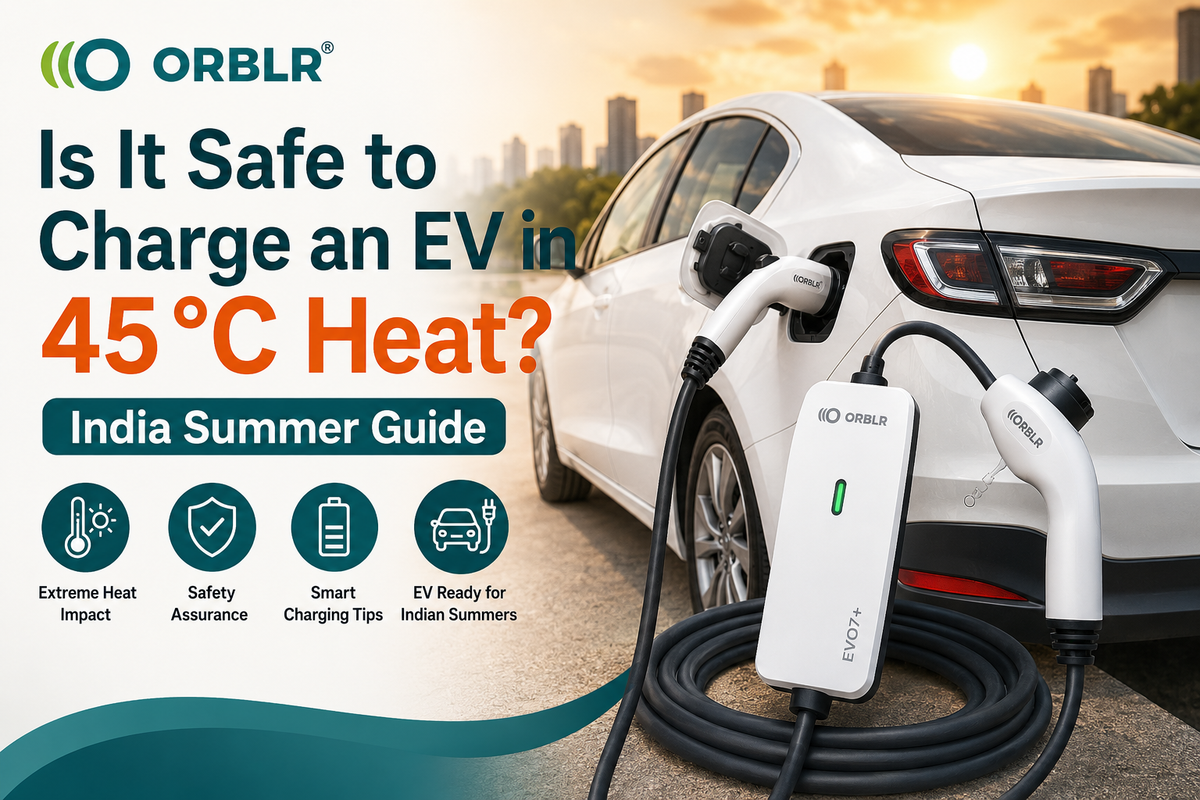
India's summers can be extremely harsh, with temperatures in many cities regularly crossing 45°C. For electric vehicle owners, one common question is: Is it safe to charge an EV in such extreme heat?
The good news is that modern EVs and charging systems are designed to operate in a wide range of temperatures. However, charging an EV during intense summer conditions requires certain precautions to ensure battery health, charging efficiency, and long-term safety.
In this guide, we'll explain how high temperatures affect EV charging and share practical tips for charging your electric vehicle safely during Indian summers.
Can You Charge an EV in 45°C Heat?
Yes, it is generally safe to charge an electric vehicle in temperatures around 45°C, provided that both the vehicle and the charger meet appropriate safety standards.
Most modern EV batteries are equipped with advanced Battery Management Systems (BMS) that monitor:
- Battery temperature
- Charging speed
- Voltage levels
- Thermal protection mechanisms
Similarly, quality EV chargers are designed with built-in safety features that automatically regulate charging conditions and protect the system from overheating.
However, prolonged exposure to extreme heat can affect charging efficiency and battery performance if proper precautions are not followed.
How Extreme Heat Affects EV Charging
1. Slower Charging Speeds
During high temperatures, the battery management system may intentionally reduce charging speeds to prevent overheating. This process protects the battery but can increase charging time.
2. Increased Battery Stress
Lithium-ion batteries perform best within an optimal temperature range. Constant exposure to extreme heat can accelerate battery degradation over time.
3. Reduced Charging Efficiency
Excessive temperatures may cause energy losses and impact charging efficiency, especially if the vehicle is parked directly under the sun.
4. Charger Performance
Poor-quality chargers without proper heat protection mechanisms may experience reduced efficiency or automatic shutdowns under extreme conditions.
Tips for Safely Charging Your EV During Indian Summers
Charge During Cooler Hours
Early morning and late evening are generally the best times to charge your EV. Ambient temperatures are lower, reducing stress on both the battery and charger.
Park in a Shaded Area
Whenever possible, charge your vehicle in:
- Covered parking
- Indoor garages
- Shaded charging stations
- Areas protected from direct sunlight
This helps keep battery and charger temperatures within safer limits.
Avoid Continuous Fast Charging
Frequent fast charging during extreme heat can generate additional heat within the battery pack. Alternating between regular and fast charging can help maintain battery health.
Monitor Battery Temperature
Many EVs provide real-time battery information through their apps or dashboards. Monitoring temperature warnings can help prevent unnecessary battery stress.
Use Certified EV Chargers
Choosing chargers with advanced safety systems is essential, particularly during India's peak summer months.
Why Charger Quality Matters in High Temperatures
The charger plays a critical role in ensuring safe charging during extreme weather conditions.
A reliable EV charger should offer:
- Over-temperature protection
- Over-voltage protection
- Over-current protection
- Automatic power regulation
- Short-circuit protection
- Weather-resistant construction
These features help maintain stable charging even during challenging environmental conditions.
How ORBLR DRIVTECH Supports Safe EV Charging
As electric mobility adoption grows in India, reliable charging infrastructure becomes increasingly important. ORBLR DRIVTECH focuses on developing EV charging solutions designed for Indian conditions, including high summer temperatures and varying power environments.
The company offers smart charging solutions for homes and commercial applications, including portable, wall-mounted, and fast-charging options. Their products incorporate advanced safety systems, intelligent controls, and reliable performance features that support a wide range of electric vehicles.
By emphasizing safety, innovation, and user-friendly charging experiences, ORBLR DRIVTECH is helping EV owners charge with greater confidence even during demanding weather conditions.
Signs That Your EV or Charger Is Overheating
Pay attention to these warning signs:
- Charging suddenly slows down
- Charger automatically stops
- Battery temperature warnings appear
- Excessive heat from charging cables
- Error notifications on the vehicle dashboard
If any of these occur, stop charging and allow the system to cool before restarting.
Summer EV Charging Best Practices Checklist
- Charge during early mornings or evenings.
- Avoid parking under direct sunlight.
- Use certified and safety-compliant chargers.
- Monitor battery temperature warnings.
- Avoid unnecessary fast charging sessions during peak heat.
- Ensure proper ventilation around the charging area.
- Inspect cables and connectors regularly.
Conclusion
Charging an EV in 45°C Indian summer temperatures is generally safe, thanks to modern battery management systems and advanced charging technologies. However, extreme heat can impact charging efficiency and battery longevity if proper precautions are not taken.
Simple steps such as charging during cooler hours, parking in shaded areas, and using high-quality chargers can significantly improve charging safety and protect your EV's battery health.
As India's EV ecosystem continues to evolve, dependable charging solutions from companies like ORBLR DRIVTECH are playing an important role in making electric mobility safer, more convenient, and better suited for the country's challenging climatic conditions.
Frequently Asked Question
1. Is it dangerous to charge an EV in 45°C heat?
No. Modern EVs and certified chargers are designed with safety systems that allow charging even in high temperatures.
2. Does extreme heat damage EV batteries?
Prolonged exposure to excessive heat can accelerate battery degradation over time, which is why proper charging practices are important.
3. Should I avoid fast charging during summer?
Frequent fast charging during extreme heat may increase battery temperatures. Moderate use is generally recommended.
4. What is the best time to charge an EV during Indian summers?
Early morning or late evening is ideal because ambient temperatures are lower.
5. Can charger quality affect summer charging safety?
Yes. High-quality chargers with built-in protection systems are better equipped to handle extreme temperatures and provide safer charging experiences.



Leave a comment
This site is protected by hCaptcha and the hCaptcha Privacy Policy and Terms of Service apply.