
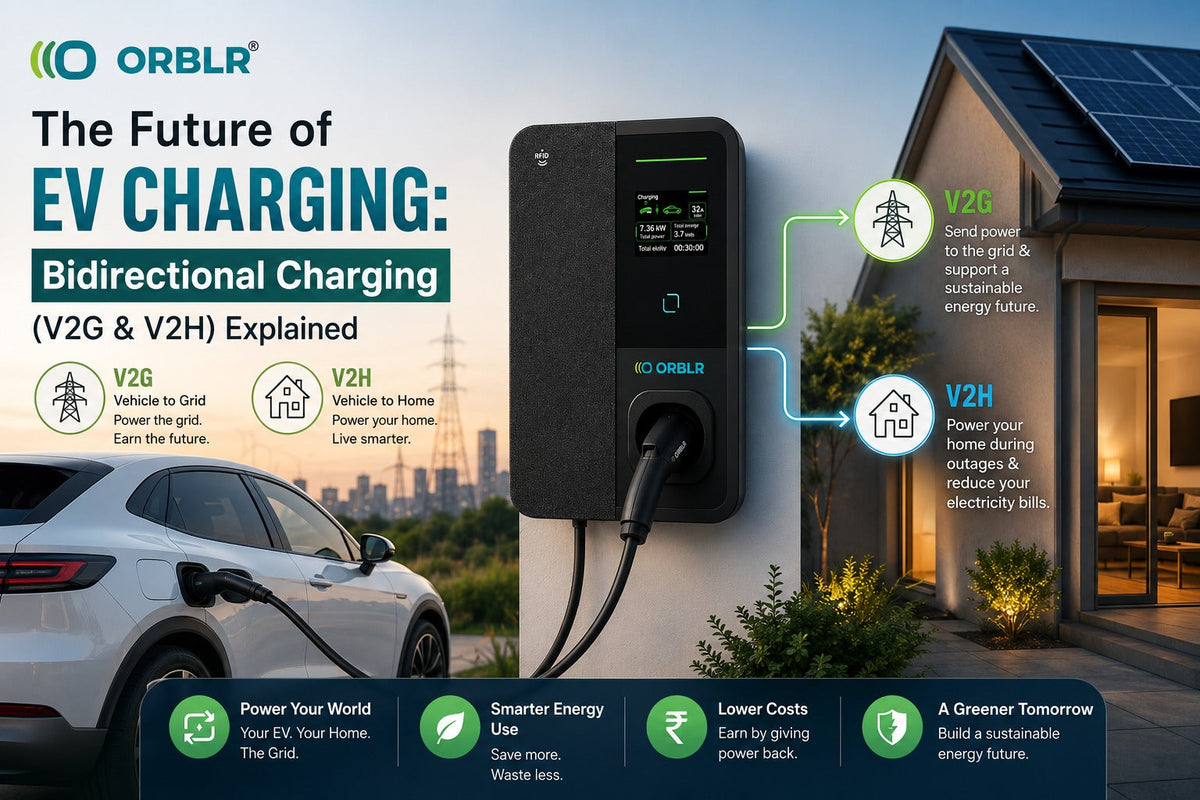
Electric vehicles are changing more than the way we travel. As EV adoption grows, charging technology is also becoming smarter. One of the most interesting developments is bidirectional EV charging, a technology that allows electricity to move not only from the grid to an electric vehicle, but also from the vehicle back to a home or the electricity grid.
This concept is commonly discussed through two technologies: Vehicle-to-Home (V2H) and Vehicle-to-Grid (V2G).Instead of thinking of an EV as simply a vehicle that needs electricity, bidirectional charging treats its battery as a potential energy resource.
For EV owners, businesses, and energy providers, this could change how electricity is stored, managed, and consumed in the future.
What Is Bidirectional EV Charging?
With conventional EV charging, the electricity flow is straightforward:
Grid → EV charger → EV battery
The vehicle receives electricity and stores it in its battery.
Bidirectional charging makes this flow reversible:
Grid ↔ EV charger ↔ EV battery
Depending on the system, electricity stored in the EV battery can be sent back to a home, building, or the electricity grid.
This requires a compatible EV, a compatible bidirectional charger, appropriate electrical infrastructure, and software capable of managing the energy flow safely.
The two major applications are V2H and V2G.
What Is V2H (Vehicle-to-Home)?
Vehicle-to-Home (V2H) allows an EV battery to supply electricity to a home.Imagine charging your EV during a period when electricity is readily available and then using some of that stored energy to power selected household appliances later.
A simplified setup looks like:
Grid → EV → Home
The EV effectively becomes a temporary energy storage system.
How Can V2H Help Homeowners?
V2H can potentially be useful in several situations.
1. Backup Power
If there is a power interruption, a compatible EV and charging system could potentially provide electricity to selected household circuits.
This can be particularly useful for essential equipment such as:
- Lights
- Wi-Fi routers
- Refrigerators
- Security systems
- Fans
- Essential appliances
The exact backup capability depends on the vehicle, charger, home electrical system, and local regulations.
2. Better Energy Management
Electricity demand and electricity availability can vary throughout the day.
A smart V2H system can potentially charge the vehicle when electricity is available and use stored energy when required.
This makes the EV more than just a transportation device—it becomes part of the home's energy management system.
3. Integration With Solar Power
V2H becomes even more interesting when combined with rooftop solar.
For example:
Solar panels → Home → EV battery
During the day, surplus solar electricity could potentially be stored in the EV instead of being wasted or exported, depending on the system and local regulations.
That stored energy could then be used later when household demand increases.
What Is V2G (Vehicle-to-Grid)?
Vehicle-to-Grid (V2G) takes the concept one step further.Instead of supplying electricity only to a home, an EV can potentially send electricity back to the wider electricity grid.
The basic concept is:
Grid ↔ EV
When electricity demand is high, connected EVs could potentially provide energy back to the grid. When demand is lower, they can charge their batteries.
This creates the possibility of thousands—or eventually millions—of EVs acting as distributed energy storage resources.
Why Is V2G Important?
Electricity grids have to constantly balance electricity supply and demand.
As renewable energy sources such as solar and wind become more common, managing this balance can become more complex because renewable generation can fluctuate depending on weather and time of day.
EV batteries could provide another layer of flexibility.
For example, when renewable electricity is abundant, EVs could charge. During periods of high demand, compatible vehicles could potentially return some energy to the grid.
This could help make better use of available electricity and support a more flexible energy system.
V2H vs V2G: What's the Difference?
Although both technologies use bidirectional charging, their main purpose is different.
|
Feature |
V2H |
V2G |
|
Full Form |
Vehicle-to-Home |
Vehicle-to-Grid |
|
Main Purpose |
Power a home |
Supply electricity to the grid |
|
Energy Destination |
House/building |
Electricity grid |
|
Potential Benefit |
Backup and energy management |
Grid flexibility |
|
Typical User |
Homeowner |
EV owner, utility, fleet operator |
|
Solar Integration |
Possible |
Possible |
|
Requires Bidirectional System |
Yes |
Yes |
In simple terms:
V2H = Your EV can help power your home.
V2G = Your EV can potentially become part of the electricity grid.
How Does Bidirectional Charging Work?
A bidirectional charging system requires more than simply reversing the direction of electricity.
The charger needs power electronics capable of managing electricity flow in both directions.
A simplified process is:
Step 1: The EV connects to the charger
The vehicle is connected using a compatible charging connection.
Step 2: The charging system communicates with the vehicle
The charger and vehicle need to communicate to determine factors such as charging status, battery conditions, and whether energy can be discharged.
Step 3: Energy is stored
When charging, electricity flows into the vehicle battery.
Step 4: Energy can flow back
When the system requires energy from the vehicle, the bidirectional charger manages the reverse flow.
Step 5: Smart controls manage the process
Software can determine when the vehicle should charge or discharge based on factors such as energy demand, charging schedules, battery requirements, and system settings.
This communication and control layer is an important part of making bidirectional charging practical.
What Are the Benefits of Bidirectional Charging?
Bidirectional charging could offer several benefits as the technology becomes more widely adopted.
1. EVs Become Energy Storage Assets
An EV battery can hold a significant amount of energy. Instead of remaining unused when the vehicle is parked, that stored energy could potentially support other electricity needs.
2. Greater Energy Independence
V2H could give homeowners another source of electricity during certain situations, particularly when combined with solar energy and suitable backup infrastructure.
3. Better Use of Renewable Energy
Solar and wind generation can fluctuate. EV batteries could potentially help store excess renewable electricity for later use.
4. Support for the Electricity Grid
V2G could allow connected EVs to participate in demand management and other grid services, subject to local market structures and regulations.
5. Smarter Charging
Instead of charging whenever the vehicle is plugged in, smart charging systems can potentially determine the most suitable time to charge based on energy requirements and system conditions.
The Role of Smart EV Chargers in the Future
The future of EV charging is moving beyond simply delivering electricity as quickly as possible.
Smart chargers are increasingly becoming an important connection between the EV, electricity supply, home, and energy management system.
A modern charging solution may need to consider:
- Charging schedules
- Energy consumption
- Vehicle availability
- Solar generation
- Battery status
- Grid demand
- Remote monitoring
- Safety controls
This is where smart charging technology can play an important role in making EV ownership more convenient and energy-efficient.
How ORBLR DRIVTECH Fits Into the EV Charging Ecosystem
ORBLR DRIVTECH is an Indian EV charging solutions brand focused on making EV charging more practical for both residential and commercial users.
The brand offers EV charging solutions across different use cases, including wall-mounted, portable, and fast-charging solutions, with an emphasis on safety, smart controls, reliability, and compatibility with electric vehicles.As EV charging evolves, solutions from brands such as ORBLR DRIVTECH can contribute to a broader charging ecosystem where charging is increasingly connected, intelligent, and integrated with energy management.
While bidirectional charging requires specific vehicle and charger compatibility, the broader movement toward smart EV charging is an important step toward the energy systems of tomorrow.
Is V2G the Future of EV Charging?
V2G has the potential to become an important part of the future energy ecosystem, but widespread adoption will depend on several factors.
These include:
- More EVs supporting bidirectional charging
- Wider availability of compatible chargers
- Standardized communication technologies
- Supportive energy policies
- Utility participation
- Consumer awareness
- Improved energy management software
- Battery technology improvements
As these areas develop, EVs could increasingly become connected energy assets rather than simply vehicles.
What Should EV Owners Do Today?
If you're a new or existing EV owner, you don't necessarily need a V2G or V2H system immediately.
Instead, consider choosing your charging setup with the future in mind.
Before buying an EV charger, check:
1. Does your EV support bidirectional charging?
2. Is the charger compatible with your vehicle?
3. What charging protocols does the vehicle support?
4. Can your home's electrical system accommodate the required setup?
5. Does your electricity provider support relevant grid-connected applications?
6. Is the charger equipped with smart monitoring and control features?
Understanding these factors can help you make a more informed long-term charging decision.
Final Thoughts
The future of EV charging is not simply about charging faster. It is about charging smarter.
With V2H, an EV could potentially support a home's energy needs. With V2G, connected EVs could potentially become part of a larger electricity network, helping balance energy supply and demand.There are still technical, regulatory, and compatibility challenges to overcome, but the direction is clear: EVs are increasingly becoming part of the wider energy ecosystem.
As smart charging infrastructure develops in India, technologies such as bidirectional charging could eventually make electric vehicles useful not only on the road but also as flexible energy resources.
ORBLR DRIVTECH is part of India's growing EV charging ecosystem, developing charging solutions designed around safer, smarter, and more accessible electric mobility.
Frequently Asked Questions
1. What is bidirectional EV charging?
Bidirectional EV charging allows electricity to flow both into and out of an electric vehicle's battery. Depending on the system, the stored energy can potentially be supplied to a home or the electricity grid.
2. What is the difference between V2H and V2G?
V2H stands for Vehicle-to-Home and allows a compatible EV to supply energy to a home. V2G stands for Vehicle-to-Grid and allows a compatible EV to potentially send electricity back to the wider electricity grid.
3. Can I use any EV for V2G or V2H?
No. The EV, charger, communication system, and electrical infrastructure must all support bidirectional charging. Always check compatibility before purchasing equipment.
4. Does V2H work with solar panels?
Yes, a compatible V2H setup can potentially be integrated with solar generation. Excess solar energy may be stored in the EV and used later, depending on the system configuration.
5. Will V2G damage my EV battery?
Charging and discharging contribute to battery cycling, but the impact depends on factors such as battery chemistry, operating conditions, and how the system manages charging and discharging. Manufacturers' recommendations should be followed.
6. Is bidirectional charging available for all EV chargers?
No. Conventional EV chargers generally provide one-way charging. Bidirectional applications require compatible hardware and vehicle support.
8. What is the future of EV charging?
The future is likely to involve smarter charging, better connectivity, renewable-energy integration, energy management, and potentially bidirectional technologies such as V2H and V2G.


Leave a comment
This site is protected by hCaptcha and the hCaptcha Privacy Policy and Terms of Service apply.